一、主要研究方向
长期深耕医学影像临床与基础研究,主攻两大方向:一是量子计算与人工智能预测模型在临床疾病中的应用,聚焦量子医学、影像组学、深度学习等技术融合研发;二是新型纳米医学材料在肿瘤治疗中的应用,探索新材料在肿瘤诊疗领域的转化应用。
二、个人简历
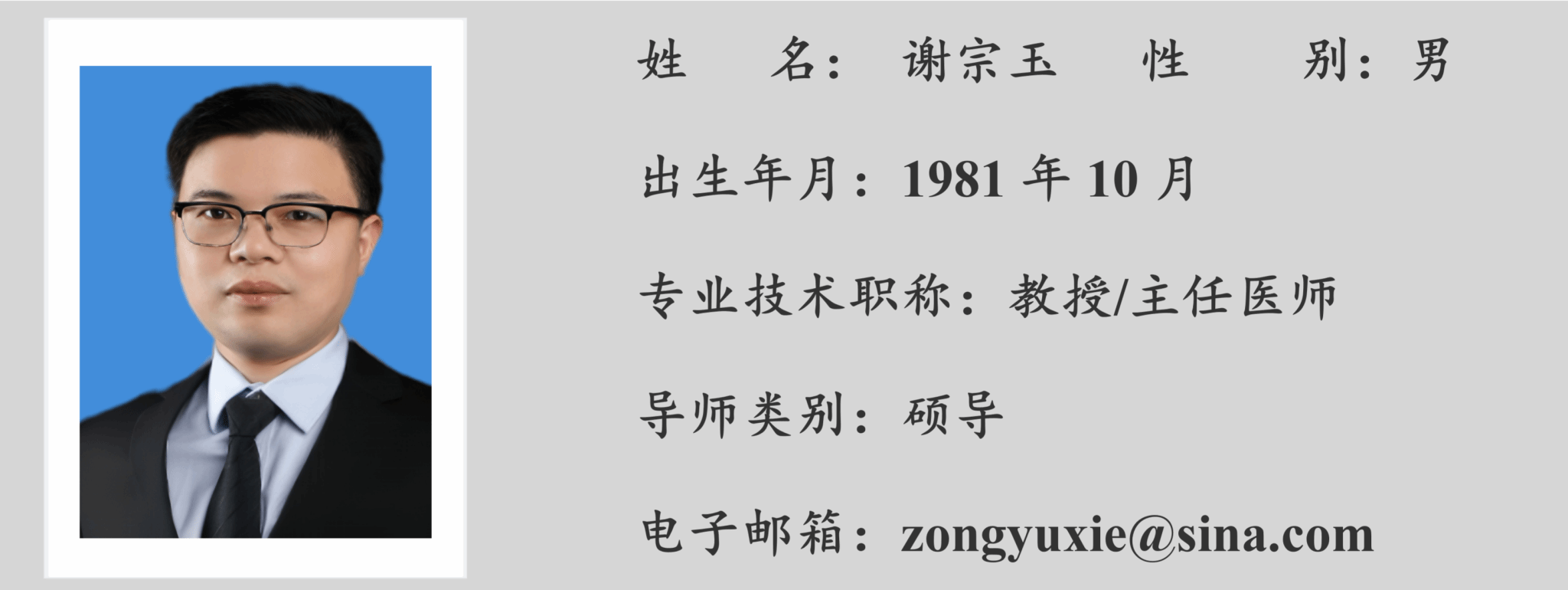
自 2005 年入职蚌埠医科大学第一附属医院放射科,历经住院医师、主治医师、副主任医师、主任医师等临床职称晋升,同步完成讲师、副教授、教授的教学职称进阶,拥有二十余年医学影像临床诊断、教学及科室管理经验,2018 年起担任硕士研究生导师,持续开展研究生培养工作,已培养硕士毕业生20名。
现任放射科副主任、教研室副主任,兼任数字医学与智慧健康安徽省重点实验室主任、安徽省呼吸系统肿瘤与感染性疾病重点实验室副主任;合肥量子计算与数据医学研究院秘书长。
学术兼职丰富,担任中国妇幼保健协会放射学分会委员,安徽省放射学学会青年副主任委员,安徽省全科医学会医学影像专委会、安徽省老年病医学会医学影像专委会副主任委员,安徽省全科医院协会医学影像管理专业委员会常委;同时受聘为《蚌埠医科大学学报》《中国中西医结合影像学杂志》《磁共振成像》等期刊编委及专职审稿专家。
从业以来专业能力与科研水平获行业及地方认可,先后入选安徽省 C类人才(2025)、安徽省“江淮英才” 培养计划杰出项目(2024)、安徽省医学影像学学科(专业)带头人(2024)、蚌埠市 “大禹英才” 创新领军人才(2024)、蚌埠医科大学 “龙湖英才” 临床带头人(2024)等人才项目。获 2022 年度安徽省科技进步奖三等奖(排名第一)。
三、主持在研科研/教学项目
[1] 安徽省江淮英才杰出人才培养计划(2024年,安徽省委组织部,30万元,主持,在研)
[2] 基于量子人工智能多模态的乳腺癌新辅助化疗治疗响应精准预测(蚌埠医科大学重点支持和培育学科领域专项(量子医学专项),2024年,项目编号:2024bypy017 ,20万元,主持,在研)
[3] 蚌埠医科大学首届“龙湖英才”-临床带头人才(2024年,项目编号:LH250302002,30万元,主持,在研))
[4]安徽省医学影像学学科(专 业 )带头人培育项目(安徽省教育厅,2024年,项目编号:DTR2024028,10万元,主持,在研)
指导研究生科研创新计划3项
[1] 基于瘤内瘤周 DCE-MRI 影像组学联合心率变异性列线图预测乳腺癌分子分型(项目编号Byycx24106)
[2] 基于 CT 影像组学列线图联合 HRV 特征预测非小细胞肺癌 PD-L1 表达状态(Byycxz24058)
[3] CT深度学习影像组学列线图预测中晚期非小细胞肺癌PDL-1表达水平及化学免疫治疗反应:一项多中心研究(Byyex25040)
四、代表性成果(论文/专利/专著等)
代表性论文:
聚焦肿瘤影像组学、人工智能影像诊断、量子医学、纳米生物材料、新冠影像诊断等领域。累计发表学术论文 40 余篇,多篇成果刊登于《Nature medicine》《Int J Surg》《Journal of Nanobiotechnology》《Materials Today Bio》等国际权威期刊。多篇论文位于中科院 Q1 区,单篇最高影响因子达 58.7;研究成果覆盖胰腺肿瘤、肺癌、乳腺癌等常见肿瘤的影像精准诊断、疗效预测、分子分型评估,同时在传染病影像鉴别、医学影像人工智能算法研发等方面形成系列成果,多篇中文论文被 CSCD 核心收录。
[1] Integrative multi-omics and radiogenomic profiling decodes NNK-related tumor remodeling and prognostic stratification in pancreatic cancer. Int J Surg 2026 Jan 7;112(4):10062-77(IF 10.3, Q1)(第一作者)
[2] A multimodal radiomics model to predict disease-free survival in resected non-small cell lung cancer: integrating clinicopathology, dual-energy CT, and deep learning features.J Thorac Dis 2026 Mar 31;18(3):227(共同通讯)
[3] Multicenter peritumoral radiomics in oncology: advances, challenges, and future directions. Radiat Oncol 2026 Mar 23;21(1)(共同通讯)
[4] Construction of a postoperative disease-free survival prediction model for non-small cell lung cancer patients based on dual-energy computed tomography parameters and blood inflammatory indicators.Transl Cancer Res 2026 Feb 28;15(2):124(共同通讯)
[5] Quantum integration in swin transformer mitigates overfitting in breast cancer screening. Sci Rep. 2025 Aug 27;15(1):31589. doi: 10.1038/s41598-025-17075-1. (IF 3.9, Q3)(第一作者)
[6] Developing a predictive model for neoadjuvant therapy in HER2 overexpression breast cancer using multi-parameter MRI radiomics: two-center retrospective study. Front Oncol. 2025 Jul 15;15:1544058. doi: 10.3389/fonc.2025.1544058.(IF 3.3, Q3)(通讯作者)
[7] Intra- and peritumoral radiomics nomogram based on DCE-MRI for the early prediction of pathological complete response to neoadjuvant chemotherapy in breast cancer. Front Oncol. 2025 Jun 4:15:1561599.doi: 10.3389/fonc.2025.1561599.(通讯作者)
[8] CLGB-Net: fusion network for identifying local and global informati on of lesions in digital mammography images.
[9]Preoperative CT-based Intratumoral and Peritumoral Radiomics Prediction for Vasculogenic Mimicry in Lung Adenocarcinoma.Current Medical Imaging.2025, 21, e15734056383032(通讯作者)
[10]Preoperative computed tomography semantic features in predicting lymph node metastasis of part-solid nodules in non–small cell lung cancer: a multicenter retrospective study. Quantitative Imaging in Medicine and Surgery. 2024 Jul 1;14(7):5151-5163.doi: 10.21037/qims-23-1631.(IF 2.8, Q2)(第一作者)
[11] Preoperative prediction of vasculogenic mimicry in lung adenocarcinoma using CT radiomics model. Clinical Radiology, 2024, 79(1): 00446-4.14. doi:10.1016/j.crad. (IF:2.6, Q3)(通讯作者)
[12] The value of MRI for downgrading of breast suspicious lesions detected on ultrasound.BMC Medical Imaging, (2023) 23:72 ( IF 2.7, Q3)(第一作者)
[13]Using CT imaging features to predict visceral pleural invasion of non-small-cell lung cancer. Clinical Radiology, .2023.08.007. https://doi.org/10.1016/j.crad.(IF:2.6, Q3)(共同第一作者)
[14] Tumor immunosuppressive microenvironment modulating hydrogels for second near-infrared photothermal-immunotherapy of cancer. Materials Today Bio, 2022 Sep 5;16:100416.(IF 10.2,Q1)(通讯作者)
[15] Intra-and Peri-tumoral Radiomics Model Based on Early DCE-MRI for Preoperative Prediction of Molecular Subtypes in Invasive Ductal Breast Carcinoma: A Multitask Machine Learning Study. Front. Oncol, 12:905551. doi: 10.3389/fonc.2022.905551(IF 4.7,Q2)(通讯作者)
[16] Global burden of oropharyngeal cancer attributable to human papillomavirus by anatomical subsite and geographic region. Cancer Epidemiology. 78 (2022) 102140.1877-7821.( IF 2.6, Q2)(共同第一作者)
[17] A novel CT-based radiomics in the distinction of severity of coronavirus disease 2019 (COVID-19) pneumonia. BMC Infectious Diseases, (2021) . 21:608.( IF 3.7, Q2)(第一作者)
[18] Polymer-based hydrogels with local drug release for cancer immunotherapy. Biomed Pharmacother, 2021, 137:111333. (IF:7.5, Q1)(第一作者)
[19] CT radiomics facilitates more accurate diagnosis of COVID-19 pneumonia: compared with CO-RADS.Journal of Translational Medicine, (2021) 19:29.(IF:7.4, Q1)(共同通讯作者)
[20] CT characteristics of patients infected with 2019 novel coronavirus: association with clinical type. Clinical Radiology, 2020; 75(6):408-414.(IF:2.6, Q2)(通讯作者)
[21] Rapid identifcation of COVID�19 severity in CT scans through classifcation of deep features.BioMed Eng OnLine, 19,63 (2020).(IF 3.9, Q2)(通讯作者)
[22] Near-infrared photoresponsive drug deliverynanosystems for cancer photo-chemotherapy. Journal of Nanobiotechnology, 18:108.(2020).(IF 12.6, Q1)(通讯作者)
[23] Artificial Intelligence-Enabled Rapid Diagnosis of Patients With COVID-19.Nature medicine.2020 Aug;26(8):1224-1228. (IF 58.7, Q1)(参与)
[24] Differentiation of gastric schwannomas from gastrointestinal stromal tumors by CT using machine learning. Abdom Radiol, 2020 Oct 20.doi: 10.1007/s00261-020-02797-9.(IF:2.4, Q2)(共同第一作者)
[25] Nomogram to identify severe Coronavirus Disease 2019(COVID-19)based on initial clinical and CT characteristics:a multi-center study. BMC Medical imaging, (2020) 20:111.(IF 2.7, Q3)(共同第一作者)
[26]基于DCE-MRI的瘤内瘤周深度学习影像组学模型预测三阴性乳腺癌新辅助化疗效:一项多中心研究[J]. 磁共振成像, 2025 ,16 (09) : 96-104.(通讯作者,CSCD)
[27]基于 CT 影像组学列线图预测早期非小细胞肺癌血管生成拟态表达[J].临床放射学杂志,2025,44(4):644-650.(通讯作者)
[28]临床-影像组学列线图术前预测 非小细胞肺癌肝激酶B1表达的应用价值[J].实用放射学杂志,2025,41(2):211-216.(通讯作者,CSCD)
[29]基于MRI影像组学列线图术前预测宫颈癌患者淋巴结转移的价值[J].医学影像学杂志,2024,34(05):120-123.(通讯作者)
[30基于MRI影像组学机器学习模型在脊髓型颈椎病危险度分级中的价值[J]. 磁共振成像, 2024, 15(4): 50-55, 77.(通讯作者,CSCD)
[31]多模态影像组学列线图术前预测乳腺浸润性导管癌腋窝淋巴结转移的价值[J]. 磁共振成像, 2024, 15(4): 78-87.(通讯作者,CSCD)
[32]基于增强 CT 影像组学列线图预测进展期胃癌隐匿性腹膜转移[J].国际医学放射学杂志,2023,46(6) :652-658(通讯作者)
[33]基于非小细胞肺癌双能CT表现及影像组学列线图模型预测其血管生成拟态[J]. 中国医学影像技术,2023,39(5):89-95.(通讯作者,CSCD)
[34] 基于瘤内及瘤周MRI影像组学列线图预测乳腺癌腋窝淋巴结转移[J]. 磁共振成像,2023,14(3) :81-87,94.(通讯作者,CSCD)
[35]基于CT影像组学列线图预测肺腺癌EGFR突变的研究[J].临床放射学杂志,2022,41(9):1676-1782.(通讯作者)
[36]CT影像组学列线图评估肺腺癌脏层胸膜侵犯[J].中国医学影像技术,2022,38(7):68-73.(通讯作者,CSCD)
[37]基于瘤内及瘤周早期动态增强MRI的影像组学模型鉴别乳腺影像报告和数据系统 4 类肿瘤良性与恶性的价值[J].中华放射学杂志, 2022, 56(7): 758-765.(通讯作者,CSCD)
[38]基于MRI、钼靶和病理的列线图预测肿块型乳腺浸润性导管癌前哨淋巴结转移的价值[J]. 磁共振成像, 2022, 13(5): 45-51.(通讯作者,CSCD)
[39]能谱CT在术前预测胰腺癌淋巴结转移的价值[J].中国临床医学影像杂志,2022,33(02):108-113.(通讯作者,CSCD)
[40]多模态影像组学在鉴别乳腺良恶性病变中的应用研究[J].临床放射学杂志,2021,40(11):2098-2104.(通讯作者)
[41]能谱CT成像及其影像组学在鉴别肺部良恶性病变中的应用研究[J].临床放射学杂志,2021,40(8):1510-1515.(通讯作者)
[42]腹盆腔孤立性纤维瘤MRI表现[J].临床放射学杂志,2021,40(3):490-494.(通讯作者)
编写专著
姜洪新,谢宗玉,等.磁共振弥散张量成像神经影像断层解剖图谱[M].湖北科学技术出版社.2024年.(编委)
